Urban Forestry
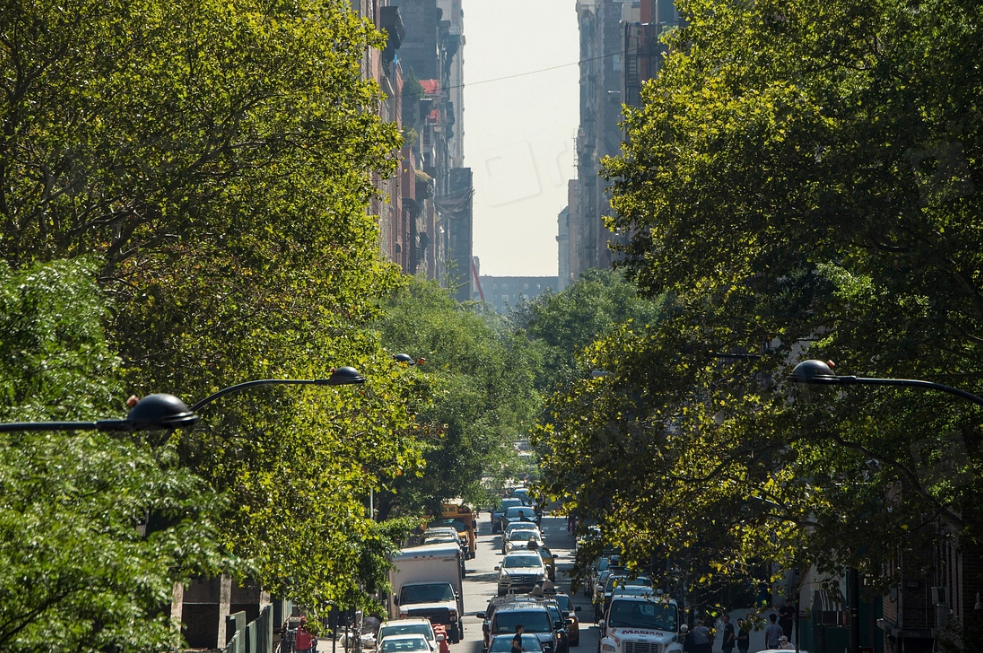
"Examples of urban forestry are" by U.S. Department of Agriculture is marked with CC0 1.0.
Guest Column Article for Alpena News by Dr. Greg Corace of the Alpena-Montmorency Conservation District
Citizens of Alpena and Montmorency Counties are often the inspiration for my articles on forest and wildlife ecology and management. This article, spurred by an inquisitive and observant Alpena resident, is a bit different. Instead of discussing the complexity of forest ecosystems, we will instead focus on urban forestry.
In a April 2006 paper in the journal Urban Forestry and Urban Greening (Vol. 4), the authors define urban forestry as, “the art, science and technology of managing trees and forest resources in and around urban community ecosystems for the physiological, sociological, economic, and aesthetic benefits trees provide society.”
As suggested by the authors of the above-mentioned article, trees in urban settings do many of the same things as do trees in forest settings. Ultimately, however, while urban trees perform important ecological tasks such as filtering urban air and acting as shoreline windbreaks, most urban trees are usually managed for the shade they provide and their aesthetic value. For instance, because urban trees receive sunlight from all sides and not only from above, they tend to grow branches at lower levels of the bole and are not as tall as forest trees of the same species. The resulting shape of these trees helps them provide even more shade as they have an increased volume of foliage.
Stress in urban trees (and forest trees) is often observed in “dieback” or “decline.” The former refers to the death of branches from the terminal bud (top of the tree) and the tips of branches. The latter refers to signs of stress throughout the tree. In urban settings dieback often occurs because of drought, root injury, insects, disease, etc. Air pollution is also a common cause of dieback in urban trees.
In a University of Tennessee Extension Bulletin (SP868) the author suggested a number of actions to maintain healthy urban trees. First, match the tree to be planted to the site based on soil type and sunlight levels. Second, provide protection for roots and trunks of existing trees during construction to reduce accidental injury and soil compaction. Third, when branch dieback occurs, properly prune the limb to reduce pest susceptibility. Fourth, when roots are damaged or soil is compacted, water the tree to maintain a more favorable rooting environment. And, fifth, water, fertilize and care for urban trees during stress periods, such as especially hot or dry times of the year.
Besides maintaining existing mature trees wherever possible, landowners and city officials should also consider adjusting what tree species are planted in urban settings. Many of the preferred deciduous tree species used in urban settings, such as sugar maple, are species of cool, northern environments. As the climate warms, urban settings with pavement will likely warm even more and hold heat longer during the day. Planting trees species that better accommodate a warming climate may be a proactive way to maintain healthy urban trees that provide a multitude of benefits to city inhabitants.
For more on planting urban trees in Michigan, please see this site from Michigan State University Extension: https://www.canr.msu.edu/home_gardening/trees-shrubs/selection
For more on urban trees and climate change, please see this U.S. Forest Service website: https://www.fs.usda.gov/managing-land/urban-forests
Greg Corace is the forest and wildlife ecologist for the Alpena-Montmorency Conservation District. For more information, including sources used in this article, Greg can be contacted via email (greg.corace@macd.org).