Forest Variability
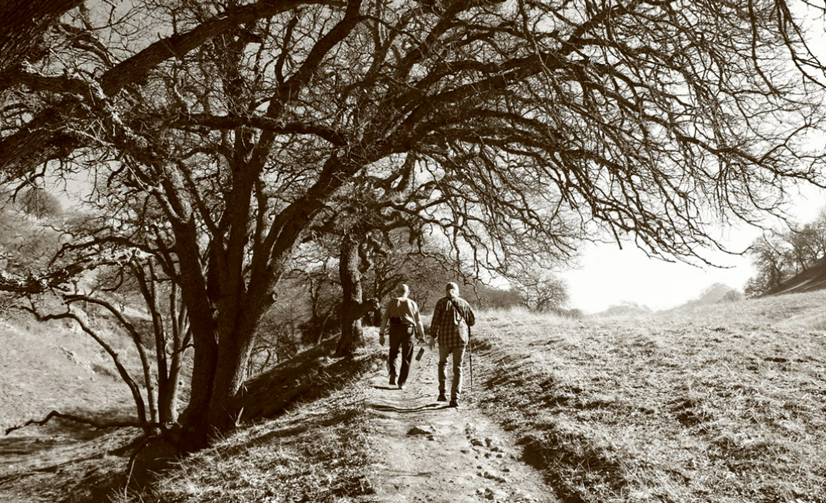
"Two Hikers" by John-Morgan is licensed under CC BY 2.0.
Guest Column Article for Alpena News by Dr. Greg Corace of the Alpena-Montmorency Conservation District
Many laypeople, and perhaps a few too many professionals, have an overly simplified view of what constitutes a forest, forestry, and a forester.
The Society of American Foresters (SAF, 1997) forest definition is, “an ecosystem characterized by a more or less dense and extensive tree cover…” SAF defines forestry as, “the science, art, and business of creating, managing, and conserving forests and associated resources in a sustainable manner to meet desired goals, needs, and values.” And SAF describes a forester as, “a professional engaged in the science and profession of forestry.”
Forests are therefore much more than trees; they are ecosystems. Likewise, forestry is much more than the removal of timber products, and a forester may be someone involved in much more than overseeing the harvest of timber.
To maintain forests as sustainable ecosystems, one must therefore understand the past and present science that guides planning and management. To a considerable degree, the developing world of forest-related science suggests that ecological sustainability starts with an appreciation of how forests naturally function and the incorporation of this understanding into planning and management.
As an enterprise involved with the management of forest ecosystems, forestry is not an agricultural profession and most foresters have little background as horticulturists (fruit tree management), arborists (single tree health in mostly urban settings), or related professions.
Greg Corace is the forest and wildlife ecologist for the Alpena-Montmorency Conservation District. For more information, including assistance with forest planning and management, email Greg: greg.corace@macd.org.