What is Carbon Forestry?
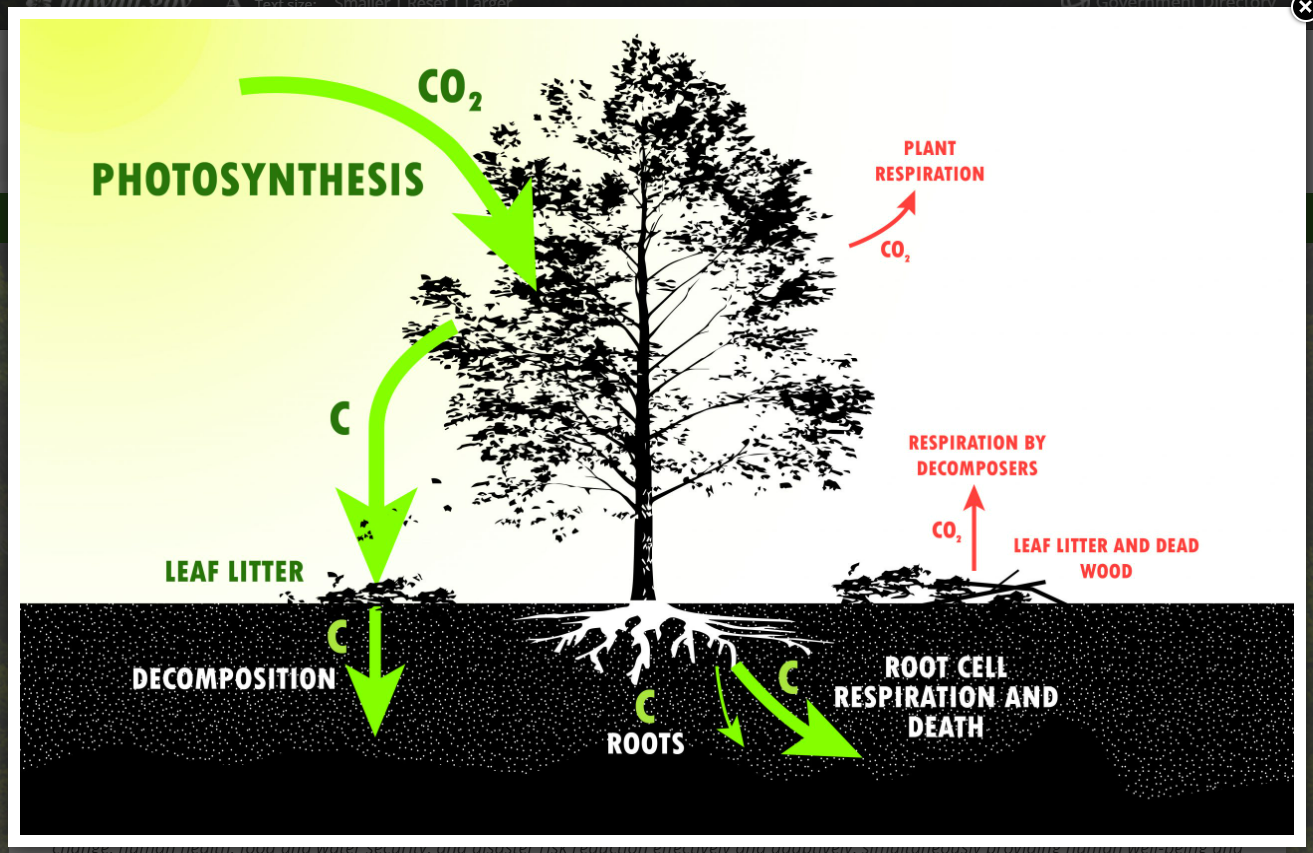
Carbon sequestration is the long-term absorption of atmospheric carbon dioxide. Trees sequester carbon in their wood by performing the process of photosynthesis, which converts carbon dioxide from the atmosphere into glucose and the cellulose that forms the tree’s body. The tree releases glucose through its roots to the mycelial network in the soil and drops leaves onto the soil, thus returning carbon to the ground while it is still living. After the tree dies, its decaying biomass becomes home to a multitude of creatures until its remaining carbon returns to the soil when it rots away.
Guest Column Article for Alpena News by Dr. Greg Corace of the Alpena-Montmorency Conservation District
Organic chemistry is the study of carbon and its interaction with other elements. Biological entities are composed of organic compounds. Therefore, organic chemistry is considered the chemistry of life.
Chitin, for instance, is one of the more common organic compounds and constitutes the shells of most insects and related organisms. Proteins, found in both plants and animals, are also organic compounds. Plants are mainly comprised of lignin, an organic compound that provides rigidity and strength, and cellulose. Human society makes use of cellulose in a range of paper products.
Carbon dioxide and methane are two of the more common organic “greenhouse gases” implicated in climate change (Climate Change Resource Center | US Forest Service Research and Development). These gases trap heat radiating back to space from the earth. Understanding and managing these and other greenhouse gases are major foci of contemporary climate science.
What is carbon sequestration and how does it differ from carbon storage?
Carbon sequestration is the process of moving carbon dioxide from the atmosphere to relatively stable storage areas or carbon “pools.” Increasing both carbon sequestration rates and carbon storage capacities are strategies for mitigating climate change. Forest plants, for instance, are very good at carbon sequestration because they use carbon dioxide through the process of photosynthesis to produce oxygen (which we use) and organic compounds that make up the plants themselves.
In forests, most carbon is stored in soils, but the amount of stored soil carbon depends on the type of forest, age of the forest, etc. Forest carbon is also stored aboveground in both living tissue (e.g., live trees and other plants) and dead materials (e.g., leaf litter, downed trees, snags). Again, the amount of carbon stored in living or dead biomass depends on a number of factors.
Generally speaking, current science suggests younger forests uptake (sequester) carbon more quickly than older forests that store more carbon (see link below).
What is carbon forestry?
The management of forests, not surprisingly, is an important consideration for those dealing with climate change mitigation. Carbon forestry considers the roles played by forest ecosystems in carbon sequestration and storage. Like many developing fields of study, the science around carbon forestry is undergoing necessary critical refinement through the peer-reviewed process. Much is unknown and much of what is thought to be known will be changed when more data are collected and analyzed.
In a 2021 paper in the journal Current Forestry Reports (v.7, pg. 245+) the authors evaluated forest carbon strategies across forest types and levels of management intensity. Initial data indicated that different forest treatments have different effects on carbon sequestration and storage. For instance, even-aged forests sequester and store more carbon in growing trees, while more complex forests and forests managed in a less intensive manner store more carbon in soils. As supported by other studies, the authors suggest that structurally complex, diverse forests of multiple tree species, multiple age classes, and abundant deadwood, whether younger or older, may function well in both carbon sequestration and storage (see also 2019, Ecology, v.100, pg. 1+).
For private landowners, carbon forestry may be of increasing interest moving forward as potential revenue streams may be linked to how carbon is managed. As with many aspects of forest planning and management, however, tradeoffs exist. Moreover, most landowners have multiple ownership goals. Therefore, carbon forestry must be considered in light of other forest values, including those commonly held such as wildlife habitat, biodiversity conservation, recreation, aesthetics, etc.
For more on the science of carbon forestry see this video: The Science of Carbon Forestry by the Forest Stewards Guild.
Greg Corace is the forest and wildlife ecologist for the Alpena-Montmorency Conservation District. For more information, including assistance with the Qualified Forest Program and related forest planning and management, email Greg: greg.corace@macd.org.